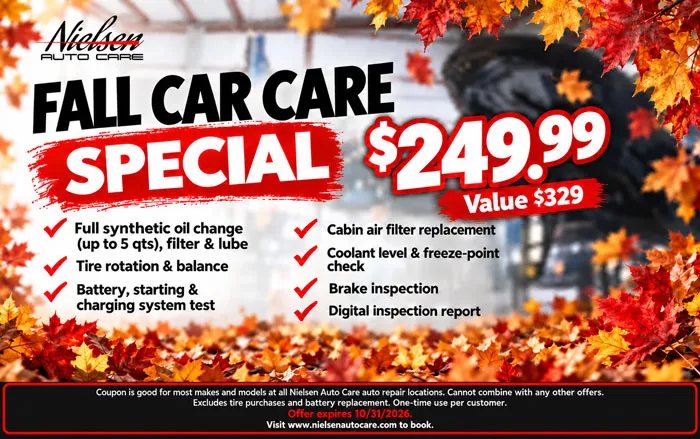
As the weather warms up and winter fades away, it’s a smart time to reset your vehicle for the season ahead. Harsh winter conditions can quietly impact important systems, and spring is the ideal window to catch minor concerns before they turn into bigger, more expensive repairs.
Use this simple spring car care checklist to keep your vehicle reliable and ready for the road.
Check Your Tires
Winter roads can take a toll on your tires.
- Look for uneven wear and check tread depth
- Adjust tire pressure, since temperature changes affect PSI
- Rotate tires if needed
Well-maintained tires improve both safety and fuel efficiency—especially for spring travel.
Test Your Battery
Cold temperatures can drain battery performance over time.
- Inspect terminals for corrosion
- Test the battery’s strength
- Replace it if it’s close to failing
If your vehicle is slow to start, it’s best not to ignore it.
Inspect Your Brakes
Winter driving conditions can accelerate brake wear.
- Pay attention to squeaking or grinding sounds
- Check brake pad thickness
- Look for any rotor damage
Replace Wipers and Check Fluids
Spring weather often means rain, so visibility is key.
- Install new wiper blades if the old ones are worn
- Top off windshield washer fluid
- Check oil, coolant, and brake fluid levels
Check Your A/C System
Make sure your A/C is ready before temperatures climb.
- Test airflow and cooling performance
- Listen for unusual noises
- Fix weak cooling early
Schedule a Digital Vehicle Inspection
Even if everything seems fine, winter can leave behind hidden issues.
A professional inspection can provide:
- A complete snapshot of your vehicle’s condition
- Clear, prioritized next steps
- Confidence heading into the warmer months
Spring maintenance isn’t about doing more—it’s about staying ahead. Addressing small issues now can help you avoid costly repairs later.
If you’re unsure where to start, a full inspection is the best place to begin.